Trending

A farmhouse table with nail holes and saw marks tells a story. A new white oak table tells the future: straight grain, even colour, and a finish you can wipe down without a second thought. Both belong in a rustic home. The trick is knowing which one suits the piece you're buying, the room it's going into, and the way your household actually lives.
Here's how the two compare on the things that matter most.
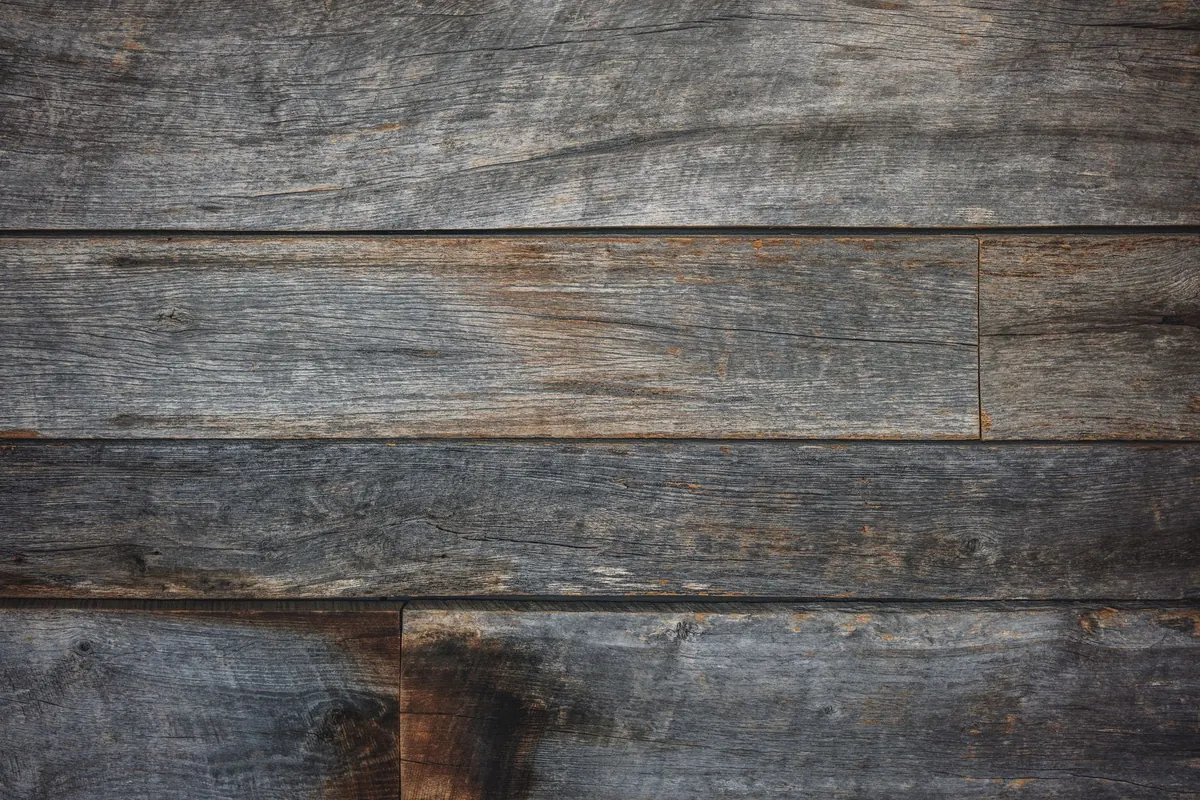
Reclaimed wood is sold on its history, and it earns the sale. Boards pulled from barn siding, old warehouses, and dismantled mills carry tight grain, deep patina, and the marks of their previous life: square nail holes, mortise pockets, water stains, beetle tracks, the ghost of an old paint colour in the grain. No two boards match, which is exactly the point. A reclaimed table looks like it has always been there.
New wood delivers the opposite pleasure. A new walnut sideboard has book-matched panels, uniform tone, and crisp edges. If you want a piece to sit quietly in a room, or you're building a set of chairs that need to read as a set, that consistency is hard to beat.
One honest warning: reclaimed wood can look busy. In a small room already full of pattern, texture, and collectibles, a heavily distressed piece can tip a space from cosy into cluttered. New wood gives your eye somewhere to rest.
People often assume reclaimed is the budget option because it's "old wood." Usually it's the reverse. Reclaimed material costs more per board foot than most new lumber, and the reason is labour: sourcing, de-nailing, metal-detecting, kiln treating, and re-milling boards that were never cut to a modern standard. You're paying for the finish work that makes salvaged timber usable.
That said, reclaimed can still be the cheaper choice in specific cases. If a local salvage yard has a large run of flooring or a stack of barn beams, the per-foot price can undercut a premium new hardwood, especially wide-plank or fumed oak.
New wood is predictable. You can price it to the board, order more next year, and match it later. For a whole-room project, that predictability often saves money in the long run, because you're not hunting for a second batch of boards that never appears.
Old timber from slow-grown trees is dense, resinous, and stable, and some of it has already survived a century of weather. That's genuine durability. The catch is that reclaimed wood can arrive with hidden checks, cracks, or rot pockets that only show up after milling. Good makers stabilise these with bowties, epoxy fills, or a fresh frame; less careful ones don't.
New wood is the known quantity. Kiln-dried stock has a controlled moisture content, so it moves less after it's built. You know the species, the grade, and how it will take a finish. Repairs are straightforward, because a carpenter can buy matching material down the street.
If the piece will take real abuse, a mudroom bench, a kitchen island, a dining table for four kids, judge the joinery before the material. A well-built new oak table will outlast a pretty reclaimed one held together with hope.
Both need attention, but of different kinds.
If you love the ritual of oiling a table once a year, reclaimed is a pleasure. If you want to set down a wet glass and forget about it, choose a sealed new-wood surface. A glass top over a reclaimed dining table is a fair compromise.
Feature walls, ceiling beams, open shelving, headboards, benches, console tables, and coffee tables. Anywhere texture and history are the point, and where the surface doesn't need to be perfectly flat.
Dining tables you'll eat off daily, desks, kitchen cabinetry, bed frames, and anything that has to match existing trim or flooring. Also food-prep surfaces: skip reclaimed for cutting boards and butcher block unless it's been properly finished and any old paint has been tested and removed. Lead-based paint on very old timber is a real concern, so have salvaged painted wood tested before sanding it indoors.
Ask yourself three questions. Is this piece a focal point or a workhorse? Do I want a surface that shows its age or one that hides it? Will I actually keep up with the finish it needs?
If the answer points to history and texture, go reclaimed and buy from someone who treats the material with care. If it points to daily practicality and easy matching, go new, and spend your money on good joinery. A mixed home works beautifully too: reclaimed beams overhead, a new oak table underneath.
Photo: Tim Mossholder / Pexels